
Login
Log in if you have an account
Register
Having an account with us will allow you to check out faster in the future, store multiple addresses, view and track your orders in your account, and more.
Create an account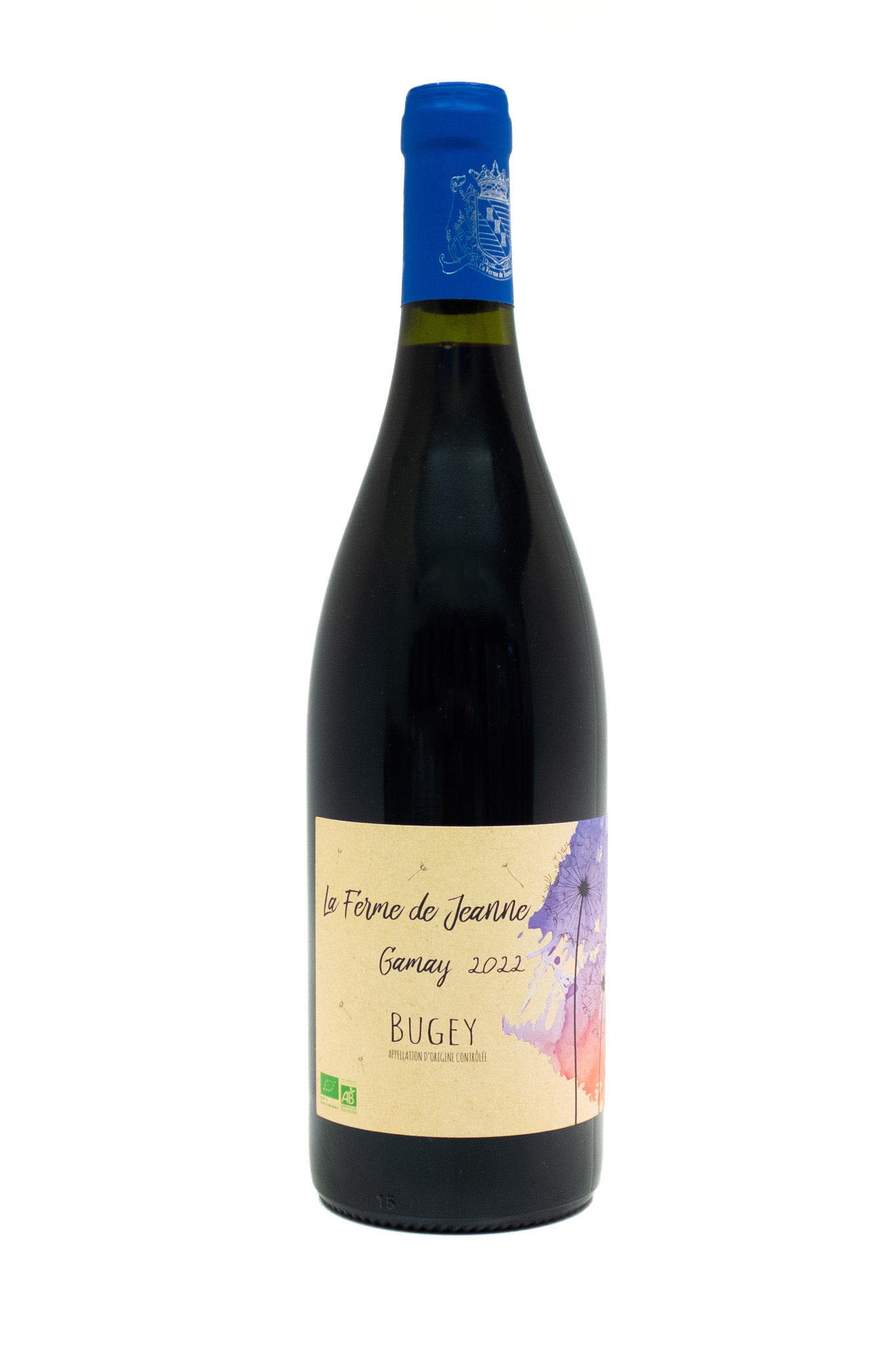
Style: Light
Country: France
Region: Bugey
Appellation/Sub-Region: Bugey AOC
Grapes: Gamay
Vineyard/Cellar Practices: Organically Grown, Biodynamically Grown, Low-Intervention/Natural Wine
SO2: 57 milligrams per liter
Where Food Meets Its Match: Drink with acidic dishes to help enhance the wine’s fruitfulness; salty dishes will help enhance the wine’s weight and body on the palate.
______________________________
If we’re being perfectly honest, the relatively unknown region of Bugey tends to be overshadowed by the reputations of the other big ‘B’ appellations of France - Burgundy, Bordeaux, Beaujolais. We get it, especially given the fact that this wildly rural area close to the border of Switzerland is composed of a mere 500 hectares of vines (for context, Burgundy has 30,000 hectares planted to vine). However, if you’re willing to venture off the beaten path, this area is producing some incredibly exciting wines emblematic of its rustic, mountainous terrain. And the region was granted appellation status in 2009, so like, the word is out! We’re especially keen on the wines of La Ferme de Jeanne, a small, organic estate situated between the Massif Gran Colombier and the right bank of the Rhône River. Originally founded in 1981 by the Balsollier family, the estate was planted to grapes, cereals, and other fruits and a small ancient basket press on the farm was used to produce small quantities of wine that was sold at markets and to locals for the next 15 years. The wines blew up and Yves Balsollier and his wife, Jacqueline became full-time vignerons in 1995. Fast forward to 2011, and the domaine was sold to Regis and Karine Bernard who eventually converted the estate to organic and biodynamic farming. For this cuvee, gamay grapes are hand harvested into small crates and macerated whole-cluster in fiberglass for 7 days before pressing. Only indigenous yeasts are used in the fermentation and teeny teeny tiny bits of SO2 are added until bottling. Expect light crunchy red fruit and brambly berries with fine grained tannin and mouthwatering acidity. Organically grown, biodynamically grown, low-intervention/natural wine.